Showing posts with label Gardening Theory. Show all posts

Each plant has specific pH requirements in order to develop harmoniously. The table below shows the pH of compost and soil. The pH up to 6,8 is consider acidic, or sour, pH between 6,8 – 7,0 neutral and above 7,0 bitter or alkaline.

Type of soil/ substrate / compost
pH minimum
pH maximum
Compost (depending on the proportion of potassium)
6,3
8,0
Manure (fully composted stable manure)
6,3
7,4
Old forcing manure (fully composted)
7,0
7,6
Leaf compost (it depends on the type of deciduous foliage)
5,0
6,0
Compost from coniferous needles (depending on the type)
4,0
4,7
Turf ground (depending on the turf)
6,8
7,4
Clay
7,0
7,8
Moss ground
3,5
5,0
Heathland ground (in chunks)
4,0
5,2
Peat
4,0
4,6
Coarse sand
5,7
6,4
Ditch sand
7,4
8,0

Seeds

In this post I will be discussing about seeds, which is the structure of the seed, how do seeds germinated, why certain seeds germinate quicker than others, why some seeds need to be chilled, or put in acids or even burnt in order to stimulate germination, why certain seeds lose their viability.

What is a seed?

A seed is a small embryonic plant enclosed in a covering called the seed coat, usually with some stored food. It is the product of the ripened ovule of gymnosperm (coniferous) and angiosperm (flowering plants) plants which occurs after fertilization and some growth within the mother plant. The formation of the seed completes the process of reproduction in seed plants (started with the development of flowers and pollination), with the embryo developed from the zygote and the seed coat from the integuments of the ovule.

Which type of seed exist?

Some seeds are closed in a fruit like those of apples or pears, other are open like those from pine cones.

Although there various types of seeds we will be talking about seeds which have two cotyledons and one cotyledon. From this point of view there is a division among plants: those who produce seeds with two cotyledons (like beans or peanuts) or those who produce seeds with one cotyledon (corn, wheat). On the evolution scale we know that plants with one cotyledon appeared more recently than plants with two cotyledons.

What is a seed made of? Which are the parts of the seed?

A seed is a plant in miniature. It has a larger storage area (cotyledon, endosperm) where it keeps its food reserve for germination, it has also an embryo (the miniature plant) and a coat (for protection). Less than 2% of a seed is water. Compare this with 95% which is the quantity of water in a mature herbaceous plant. It is the low water content that protects the seed from frost.

How does germination occur?

When the seeds find the ideal condition the environment, they begin to germinate. First of all their coat is moisten with water and it becomes softer. As soon as the water begins to penetrate the coat and it reaches the embryo, if the seed is viable, the embryo reacts and begins to develop into a plant. First the seed will grow roots that which continue to absorb more water.

Which are the steps of the germination?

Once the coat has been broken, because of the contact with, water the seed will grow roots. A seed is like a sponge, is capable of retaining water. The roots have very fine hairs which help in water absorption. Once the small root is grown then the main stem begins to develop. At this point plants are not capable of photosynthesis and they take their food from the energy stored in their seed (in endosperm and cotyledons). In contact with water the substances (starch, proteins and fats) saved in these storage parts of the seed begin to break down into more simple compounds necessary for the nutrition of the new plant. Once the main stem reaches the surfaces of the soil they, under the influence of light they begin photosynthesis and develop further. They become greener and the leaves will become bigger. The roots continue to absorb water and nutrients from the soil and these are transported to the leaves, where under the influence of light they process this absorbed resources into food necessary for further development of the plant.


What happens with seed once the plant has grown above the ground and begins photosynthesis?

By that time, probably most of the energy reserves are depleted. Certain parts of the seeds may transform into leaves. This is obvious at plants with two cotyledons. This metamorphose ensure that the plants can begin earlier the process of photosynthesis. This first leaves are often named embryonal leaves or false leaves. In the left photos you can see how certains parts a seed metamorphosed.

The photo on the right shows you a healthy seedling of a pumpkin (Curcubita maxima). The cotyledons are transformed into two parallel large leaves (embryonal leaves), capable of photosynthesis, while in the center of the plant the first real leave begins its development.
Why my seedlings are growing long and frail? Why do my seedlings collapse after a while?

This happens when the young seedlings do not have enough light to sustain reliable photosynthesis. If you start a plant from seed in the dark, it will grow using the energy resources. It will grow high looking for light but it will be very fragile. Once the energy source from the seed is depleted the plants will die because they are not able to sustain themselves.
These very youg seedlings of Aster look frail because they dont receive enough light. They are not growing upwards because they twist after the light. The window pane inside a house might be the ideal place to start seeds, but once the seeds germinated need to be moved to a lighter and a colder place.

 Do all plants need light in order to germinate?

No. Germination of certain plants is not related to light. Some plants need complete darkness in order to germinate. Sweet pea (Lathyrus odoratus) is this type of plant.

Why certain seeds do not germinate at all?

Certain seeds have a short viability. This means that embryo inside stays alive only for a short while. This is a way in which plants determine that most viable embryos will produce the most viable plants. Certain seeds, like those from cocoa (Theobroma cacao) remain viable only for a few days, while other like those from wild poppies remain viable for decennia. Some other seeds simply do not have an embryo to germinate. This is mostly the case of some modern hybrids of vegetables and decorative plants.

How do the seeds lose their viability?

The seeds lose the capacity to germinate if they become completely dry. This is seeds are kept in lower temperature conditions in the seed banks all over the world.

Why the collected seeds from a certain plant refuse to germinate or take a longer time to germinate?

Plants like any other living organism are determined to conserve their species and survival. This is why certain seeds refuse to germinate immediately. If an acorn would germinate immediately then the winter frost would destroy the young plants. This is the case with the seeds of most deciduous trees. So certain plants purposely delay the germination of their seeds. This is done by providing the seed with a thicker coat, or certain chemicals etc.

Why would plants delay their germination?

Although it may annoying for horticulturist, plants seek the best condition for their flourishing. At the same time plants look after themselves, in the sense that desire to conserve their species. Staggered germination occurs only because of these reasons.

How do plants stagger germination?

One interesting scientific observation is the case of allelopathy (in Greek, "mutual suffering"). Certain plants, like the walnut tree eliminate competition by saturating the neighbouring region with substances than impede germination of its own seeds or even other plants. It is supposed that the roots of the plants release allelochemicals, and this is why farmers cannot grow other crops under walnut trees.

Certain plants produce seeds that can germinate only under specific wavelengths of light. Sunlight is composed of various colours (wavelenghts) Certain seeds desire only red light in order to germinate. In a forest were the canopy is dense, the red light is filtered by the leaves of other plants. A seed that rests on the floor of that forest may wait for years until one of the trees dies, creating thus an open space. When it receives the necessary light will start to germinate. This is mostly the case of evergreen rain forests.

Certain seeds need to be ingested by animals and birds and carried away for miles and miles. In this way plants ensure a wider propagation. However, in order to protect the embryo inside, the coat of the seed is thicker and has to withstand the action of gastric acids from the digestive systems of those animals. Once the seeds are eliminated, and the coat is scarified by the action of these acids, the seed is ready to germinate.

Another unusual requirement for the germination of some seeds is that to be scarified by fire. This treatment applies only to seeds with a thick coat and it is common only among the species living in areas where periodic lightning-fires are part of the balance of the nature. The plants known under the generic name of chapparal are known to germinate under these conditions. After the fire has passed the coat of the seed is scorched and as soon as the first rain comes in they begin to germinate, taking the place of their burnt to death mother plants.

When attempted to grow species of desert flowers, it has been shown that freshly collected seeds germinated the best when they were put for a week in an oven at about 50 degrees Celsius. This actually simulated their native environment. This happens during the summer months in certain desserts. During the winter months, the rains come in and the plants have better conditions for developing and then the seeds would germinate.

The horticulturists often mimic the general conditions of the native geographical areas of the in order to ensure a good germination. Sometimes this proves to be a real challenge. However, in a future article I will discuss about various methods of simulation.

The table below comprises some of the most popular indigenous weeds. They are also indicators of the type and quality of the soil when they are wildy growing.
Name of the plantPhotoWhat do they show?Observations
Field Bindweed (Convolvus arvensis)
Heavy clay soil, rich in NitrogenAvoid using the rotary tiller because it multiplies the fragments of the rhizomes which root very quickly.
Lawn Daisy (Bellis perennis)
Clay soil with an acidic tendencyThis plant is not at all competing with the others.
Smooth Pigweed (Amaranthus hybridus)
Soil rich in NitrogenThe plant produces many seeds and becomes quickly invasive.
Common Broom (Cytisus scoparius)
Acid soil, often sandyUsually good soils for strawberries and asparagus.
Common Dandelion (taraxacum officinale)
Heavy clay soil, rather compact, rich in organic matter.While it is not competing with other plants, it still needs to be removed completely from the ground.
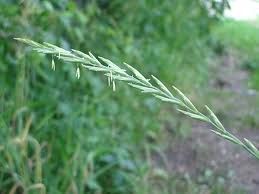
Couch grass (Elytrigia spp)
Exhausted soil, too mechanically cultivated, too rich in potassium and nitrogenAvoid using the rotary tiller because each fragment produces a new plant.
Common purslane (Portulaca oleracea)
Sandy soil which does not retain water, showing first signs of erosionRather a Southern type of plant which can be consumed fresh or prepared. Rich in vitamins.
Common Horsetail (Equisetum arvensis)
Wet soil, insufficinetly aeratedHorsetail indicates that a high flow of water.
Wild carrot (Daucus carota)
Lime dry soilDo not remove all the plants because it is a host for various useful butterflies and insects.
Flanders poppy (Papaver rhoeas)
Humus rich soilIndicates a good agricultural soil.

This is the time when you can best evaluate what type of soil you have in your garden or allotment. This is important because certain plants have a preference for a particular type of soil, while the others will recede. We will discuss about certain important features of the soil like: profile, texture, pH, fertility and living organisms. The quality of the soil determines the quality of your products.
The profile of the soil is the represented by several different layers:


  1. The highest layer may be litter, this is clearly seen in the forests and it is the result of falling leaves and other parts of the plants living in the area.
  2. Just under the litter it is the humus. It is usually darker, finer and well drained. It is composed mostly by mineral parts and organic parts. Most of the organic part of the soil is found in the upper layer, ideally somewhere between 60 – 90 cm.
  3. The upper layer is a mixture of organic and inorganic matter, lighter in colour less fertile. The roots of the plants are digging through this layer looking for food, still.
  4. Underground it is the lower part of the soil. It is more compact, it may contain stones or water, it lacks aeration and roots receive less oxygen. Most of the fruit trees expand their radicular system into this layer.
  5. Underground may rest of different type of rocks which are impenetrable and they do not offer a source of food. Sometimes the roots of the tress may go around the blocks of stone to seek support. In other parts, near the rivers, this part may be always waterlogged and the survival of the roots of the plants is impossible.
In the left picture you are shown a soil profile or a grass land. This is not the ideal profile that you like to have in the garden, because the humus layer is not thick enough (the darker part). The deeper you go, the lighter the soil it gets. This is because deep soil lacks organic matter.


The texture of the soil may or not be identical in a garden. It all depends on the plants that were previously cultivated, the original features and the improvements given to the soil. The size of the particles forming the soil determines its texture. From this point of view we may classify the soil into three categories: clay soils, sandy soils, loamy soils.
  • Clay soils
    Are composed of very fine particles of sand of the size of 2 microns. This is about 100000 times smaller than a normal grain of sand. These soils are heavy, they tend to be on the wet side and they keep water and nutrients very well. The drawback is that they are compact and difficult to work and many of the plants will have difficulties in developing their roots. Also during the dry spells, the soils tend to dry forming light grey rocky blocks, difficult to break apart. They have a tendency to waterlogging and extra-care should be given to the overwintering plants, because it facilitates rotting of the roots. In addition they warm up slowly during the spring and seed germination is delayed.
  • Sandy soils
    They are just the opposite of the clay soils. They are composed mostly of sand, which has the capacity of being airy and oxygen reaches easier the roots of the plants. However they have a low water and nutrient retention. Certain root plants (like carrots, or potatoes) will flourish in these grounds provided that they receive regulate feeding and watering. They warm up quickly during the spring and they can be worked easy.
  • Loamy soils.
    They are crumbly rich organic grounds, with good water retention and light structure. They are the best soil you can have in your garden, because they are composed of a good ratio of humus, clay and sand. 
    The ideal soil for the garden is composed of 65% sand, 10 % lime and 5 % humus. It is supple, crumbly, easy to work, had good water retention without the risk of becoming waterlogged.
How to determine your soil texture?
Look at your soil, take some samples. If you can make out of your soil a sphere, and while you shaping it you are reminded of Plasticine then you most probably have a clay soil. If it is sandy it loses shape immediately and if you have loam you will see that it is crumbly and the surface of your sphere is not regular.
pH. Is your soil alkaline or acidic?
pH measures whether your soil is bitter or sour, alkaline or acidic. pH is measured on a scale from 0 to 14. The lower the pH value, the more acidic the substance, the higher the value the more alkaline the substance is. For instance, lemon juice has a pH of 2, orange juice a pH of 3 and tomato juice a pH of 4, while sea water has a pH of 8, backing soda of 9, bleech of 13. The neutral value stands at 7. That is the pH of distilled water. 

Because of the composition of the soil, normally, the garden soils fall between 4.5 and 7.5. Certain plants, like Hortensias, Rhododendrons and Azaleas prefer rather acidic soils, others, like cabbages, more alkaline. Most of the garden plants flourish at pH of 6.5, so a very slightly acidic soil. While is relatively easy to increase the pH of the soil by adding lime, the things are not so simple when you desire to lower the pH.
The pH of the soil is important because the plants are able to absorb nutrients they need only under specific pH conditions. If the pH is too high or too low, certain nutrients, even if they exist in the soil, they practically unavailable to the plants. The attached diagram shows the availability of certain nutrients according to the pH of the soil.

Fertility of the soil is determined by five aspects: air, water, pH, organic matter and mineral nutrients. A fertile soil is rich in major nutrients (nitrogen, phosphorus and potassium), has sufficient quantities of mineral nutrients also called minor or oligo-nutrients (boron, chlorine, cobalt, copper, iron, manganese, magnesium, molybdenum, sulphur, and zinc), it has a good pH (usually 6.5). It is rich also in organic matter which has the capacity of making the soil lighter, easier to cultivate and contributes to drainage and water retention. A fertile soil is not only able to retain water but also has the capacity to avoid waterlogging. Air is important for the developing of the roots. Without air, the roots simply suffocate and then rot and the entire plant is compromised.
The soil is a true ecosystem by being the siege of intricate alimentary chains. The organisms in the soil participate actively in furnishing a good quality soil by their way of feeding themselves. The woodlouse, myriapoda, larvae of the flies and termites are fragmenting the organic matter. Certain mites, springtails and termites continue the fragmentation of organic matter in even smaller compounds. Beetles and their larvae, fungi, nematodes, worms and bacteria continue the fragmentation to even simpler compounds, making them available for the roots of the plants. At the same time ants, moles, slowworms, voles, termites are digging and making small tunnels in the ground, making it more airy. However some of these organisms may prove to be dangerous itself. Snails are feeding themselves on the crops but they are enriching the humus with organic matter once they are dead. Earthworms, although they are not directing menacing the crops, while they are digging tunnels underground can bring diseases and viruses to the roots of the plants. On the market exist a large assortment of chemicals destined to destroy all the insects in the ground, however this not ecological, and on long term these chemicals unbalance the healthy ecosystem of the soil.


Hardiness zones

This is a tool firstly used in America that shows a geographically determined area in which a species of plants is capable of flourishing under the specific climatic conditions of that area. It is mostly used to determine whether or not in that geographical area a particular plant is able to withstand the lowest temperatures during the winter. The temperature scale of hardiness zones is situated between two temperature extremes -54°C to more than 13°C. Most of continental Europe is situated between zone 5 and 10.

The table below shows the hardiness zone according to minimum temperature.

ZoneFromTo
0a< −53.9 °C (−65 °F)
b−51.1 °C (−60 °F)−53.9 °C (−65 °F)
1a−48.3 °C (−55 °F)−51.1 °C (−60 °F)
b−45.6 °C (−50 °F)−48.3 °C (−55 °F)
2a−42.8 °C (−45 °F)−45.6 °C (−50 °F)
b−40 °C (−40 °F)−42.8 °C (−45 °F)
3a−37.2 °C (−35 °F)−40 °C (−40 °F)
b−34.4 °C (−30 °F)−37.2 °C (−35 °F)
4a−31.7 °C (−25 °F)−34.4 °C (−30 °F)
b−28.9 °C (−20 °F)−31.7 °C (−25 °F)
5a−26.1 °C (−15 °F)−28.9 °C (−20 °F)
b−23.3 °C (−10 °F)−26.1 °C (−15 °F)
6a−20.6 °C (−5 °F)−23.3 °C (−10 °F)
b−17.8 °C (0 °F)−20.6 °C (−5 °F)
7a−15 °C (5 °F)−17.8 °C (0 °F)
b−12.2 °C (10 °F)−15 °C (5 °F)
8a−9.4 °C (15 °F)−12.2 °C (10 °F)
b−6.7 °C (20 °F)−9.4 °C (15 °F)
9a−3.9 °C (25 °F)−6.7 °C (20 °F)
b−1.1 °C (30 °F)−3.9 °C (25 °F)
10a−1.1 °C (30 °F)+1.7 °C (35 °F)
b+1.7 °C (35 °F)+4.4 °C (40 °F)
11a+4.4 °C (40 °F)+7.2 °C (45 °F)
b+7.2 °C (45 °F)+10 °C (50 °F)
12a+10 °C (50 °F)+12.8 °C (55 °F)
b> +12.8 °C (55 °F)


This is a very good table to determine the hardiness zone of the area where you live. For example, if you recall, or you can determine the lowest temperature in your area for the last 30 years, then can find out which is your hardiness zone. For instance, mine is 8a. This means that the lowest temperature in my town was -11 degrees. Most of European region are situated between hardiness zones 5 – 10.

Many of the cultivated plants are in fact grown outside their original hardiness zone. Tomatoes cannot withstand frost at all. This makes them a zone 10b plants. However, their cultivated as annuals in other, colder zones. Sometimes if a microclimate is created then the temperature can vary outside the hardiness zone.

About this blog


Total Pageviews

Blogger templates

Labels

Blogroll

Labels

Pages

Powered by Blogger.

Popular Posts

Followers

About Us...

We are a small group of people from Belgium and Romania animated by the idea that we can live harmoniously by integrating into our lives more of what natures has given us. We think that is important to keep our bodies and minds healthy and by exercising a part of our daily activities in contact with nature. Our interests in organic gardening are suplemented by alternative healing formulas and food receipies.